
Nablus before the Nakba: olive oil, soap, markets, refuge
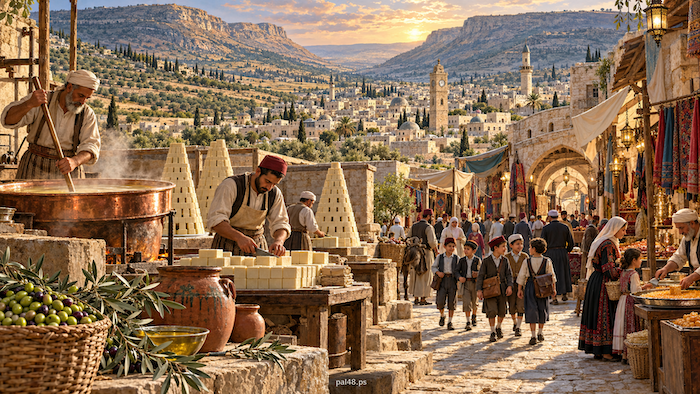
In Nablus before the Nakba, olive oil travelled from the village to the soap factory and left it as soap stamped with its maker’s mark, bound for the markets of Palestine and the Arab world. In the alleys branching off Khan al-Tujjar, cloth sellers, spice merchants and sweet makers worked side by side, while pupils headed to school and the sick to the hospital and clinic. Set between Mount Ebal and Mount Gerizim, the city was a centre of work, trade and learning, living with its countryside through the cycle of oil, grain, buying and selling. [3][4][5][12][15]
Then came the Nakba of 1948. Israeli forces did not occupy Nablus in that war, but the city took in thousands of refugees whom Zionist forces had driven from Lydda, Ramle, Jaffa and their villages, and it lost its markets on the occupied Palestinian coast. The camps of Balata, Askar and Ein Beit al-Ma’ were later set up on its edges, and the city’s story came to include the stories of people barred from returning to their homes. [1][5][24][25][26][31]
This article traces life in Nablus in the late Ottoman period and under the Mandate: the origin of its name, the Old City, farming, industry and markets, women and customs, education and health, the national movement, and then what the Nakba did to the city and to those who sought refuge there.
Contents
- Nablus before the Nakba at a glance
- The name: from Neapolis to Nablus
- Between Ebal and Gerizim: quarters, houses and water
- Olives and fields: a city living with its countryside
- The soap factory: oil turned into industry
- From the flour mill to the match factory
- Khan al-Tujjar and the markets: the city’s daily heart
- The railway and roads: Nablus connects to the country
- Knafeh, cheese and sweets: food as craft and hospitality
- The hammam: bathing, meeting and the groom’s procession
- Ramadan, feasts, outings and customs
- Education: schools for boys and girls
- An-Najah: a national school that became a college
- Women: education, civic work and social limits
- Health: the National and Evangelical hospitals
- Mothers, children, public health and the countryside
- Poetry and culture: Ibrahim and Fadwa Tuqan
- Nablus against the Mandate
- The 1927 earthquake: a city that rebuilt itself
- The Nakba: a city that stayed, markets that were cut off
- Refugees in the city: shelter, relief and care
- Balata, Askar and Ein Beit al-Ma’
- The Nakba’s impact on education, health and work
- From the Nakba to occupation: Nablus after 1948
- Frequently asked questions about Nablus before the Nakba
Nablus before the Nakba at a glance
| Item | Details |
|---|---|
| Location | A valley between Mount Ebal to the north and Mount Gerizim to the south |
| Elevation of the historic town | About 525 metres above sea level |
| City population, 1922 | 15,947 |
| City population, 1931 | 17,498 |
| City population, 1945 | 23,250 |
| Main industries | Soap, flour milling, matches, sweets and traditional crafts |
| Institutions before 1948 | An-Najah College, government and community schools, the National Hospital and the Evangelical Hospital |
| In the Nakba | Refugees received, coastal markets lost, three camps set up in 1950 |
| Occupation of the city | June 1967 |
The population figures are for the city only, not the villages of its district. “Jabal Nablus” was a historical region distinct from the Mandate-era Nablus district and from today’s Nablus governorate. [2][3][7][8][12][15][17][34]
The name: from Neapolis to Nablus
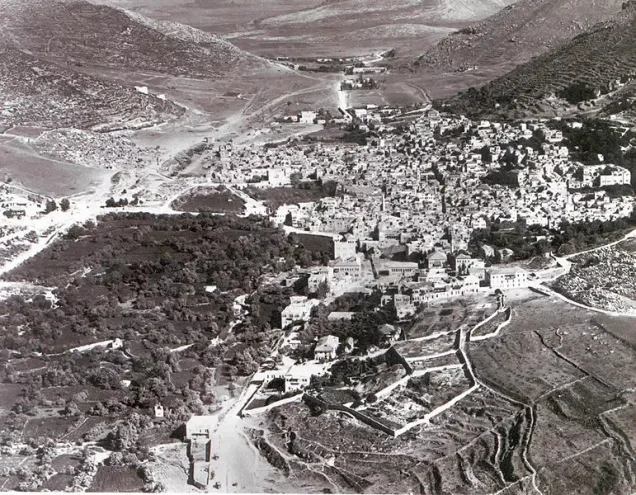
The name Nablus comes from “Neapolis”, the “new city”, the name of the Roman city founded in the first century CE, which became “Nablus” in Arabic. Tell Balata, east of the present city centre, preserves the remains of an older urban site. [1][3]
Nablus was also known as “Little Damascus” for its ties to Syria and the resemblance of its markets and architecture to those of Damascus, and as “Jabal al-Nar” (Mountain of Fire), a name tied to its place in the history of Palestinian resistance. [1][3][23]
Between Ebal and Gerizim: quarters, houses and water
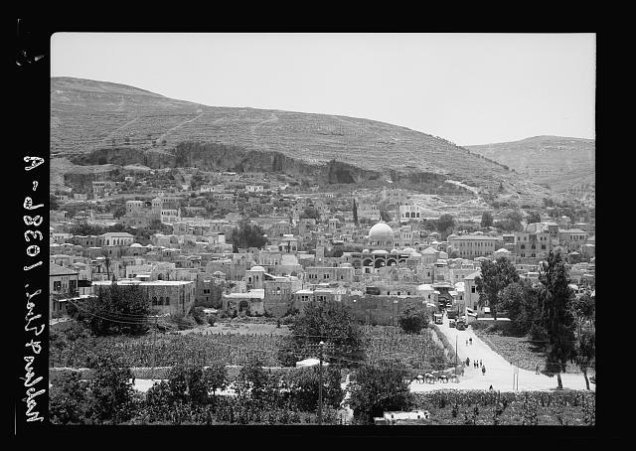
The Old City was divided into quarters, including al-Yasmina, al-Qaryun, al-Habala, al-Qaysariyya, al-Aqaba and al-Gharb. Its houses were grouped around courtyards (ahwash), with vaulted passages, mosques, churches, commercial buildings and bathhouses; moving from market to quarter to courtyard meant moving from public space into the world of family and neighbours. [3][27]
Not all houses were alike: the palaces of wealthy families differed in size and decoration from the homes of craftsmen and labourers. [3]
Water was the basis of this world. Springs made the bathhouses and public facilities possible, and the cleanliness, distribution and upkeep of water were among the municipal affairs that appear in its records, alongside health, roads and education. [10][20]
Olives and fields: a city living with its countryside
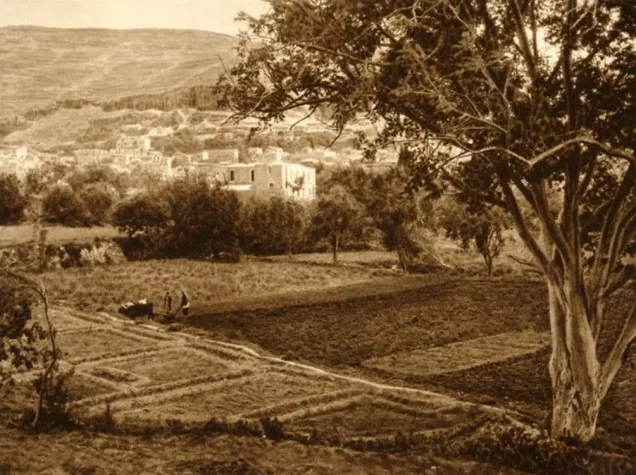
Nablus was bound to the olive groves of the hills and surrounding villages; oil was food, merchandise and the raw material of soap, and the history of the soap factory was inseparable from that of the farmer, the press and the merchant. [4][5]
The rural economy was not limited to olives: the region also produced grain, fruit trees and livestock. A study of the al-Ni‘ma mill shows that cotton, once prominent in Jabal Nablus, declined after the mid-nineteenth century, while grain and the flour trade grew in importance. The market tied this variety together, making the village a partner in producing the city’s wealth. [4][7]
Read also: Agriculture in Palestine before the Nakba and The Palestinian village, home and threshing floor.
The soap factory: oil turned into industry
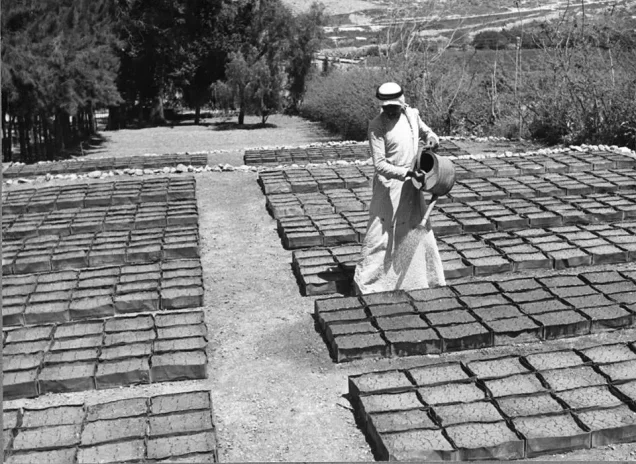
The soap factory (masbana) was among the buildings that best expressed Nablus’s economy. Ingredients were boiled, then the soap paste was spread, cut, stamped, dried and wrapped, in work organised in stages and specialised teams, and the factories carried trade names and emblems on their wrappers. [5]
Among the brands of the trade were the Two Keys, the Camel, the Ostrich, the Star and the Full Moon. The stamp tied each bar to its source, making soap a commodity that carried the city’s name into local and regional trade. The industry was concentrated in Nablus thanks to the abundance of olive oil in the region. [4][5]
In 2024 UNESCO inscribed the tradition of Nabulsi soap making on its list of Intangible Cultural Heritage, as a craft based on olive oil, water and an alkaline agent, passed on through practice within families and workshops. [6]
Read more: Nabulsi soap and the history of the city’s soap factories.

From the flour mill to the match factory
Nablus also knew mechanised industry. In the 1920s the al-Ni‘ma mill was established with the participation of the al-Masri and al-Alul families, with machinery imported from a Swiss company, turning the western area around it into an industrial and commercial zone, according to a study by Shaden Awad and Manal Bishawi. [7]
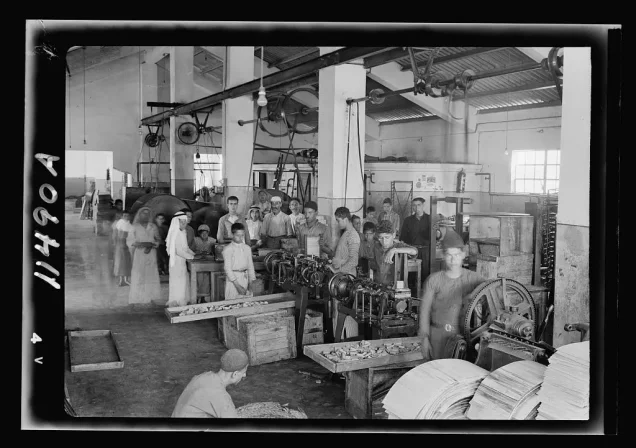
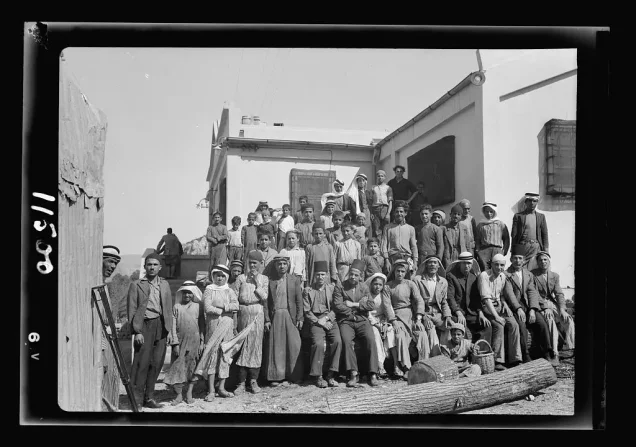
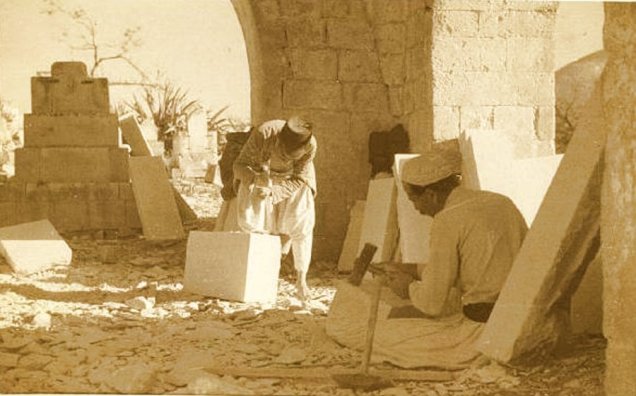
Library of Congress photographs dated 12 June 1940 show the match factory with its workrooms, machinery, box making and packing, and other photographs show stonemasons with their tools as they expanded the city’s buildings. [8][19][27]
Read also: Palestinian industries before the Nakba.
Khan al-Tujjar and the markets: the city’s daily heart
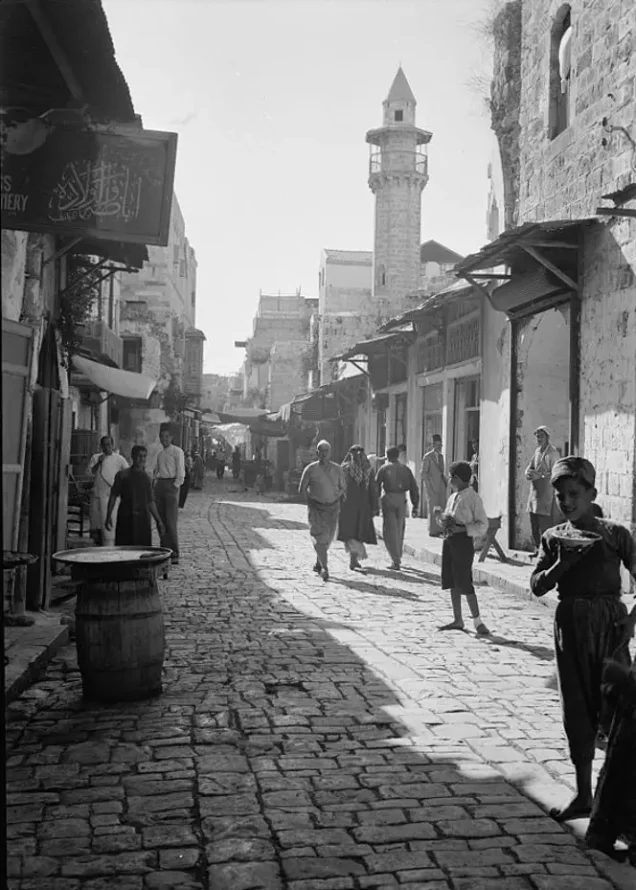
Khan al-Tujjar and the markets around it were among the centres of exchange in Nablus. Shops of crafts and goods branched off the trade routes, the city’s life connected to the villages of the hills and to other Palestinian towns, and a craftsman’s workshop or shop was often close to his home. [3][27]
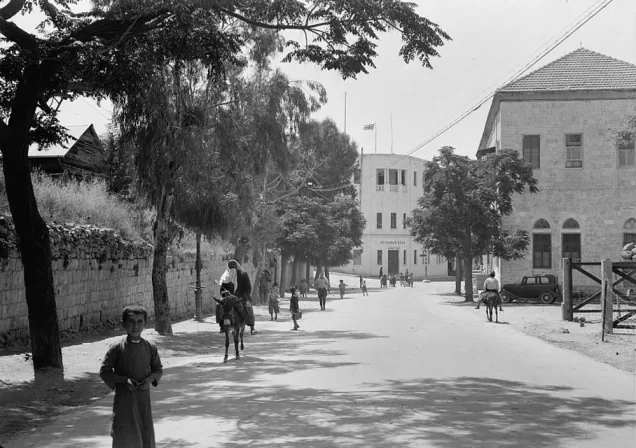
In the market news travelled, relationships formed and people traded information on crop prices and road conditions. Old photographs show streets crowded with pedestrians and pack animals, then wider streets beginning to take modern transport. [27]
Banks, the post office, the municipality and the railway station connected the city’s trade to the world beyond its alleys, and municipal records hold files on water, electricity, engineering, crafts and the economy. [20]
Read also: Markets and trade in Palestine before 1948.
The railway and roads: Nablus connects to the country
Nablus was reached by a network of roads and had a railway station by the late Ottoman period: the Nablus–al-Mas‘udiyya line, about 12 kilometres long, was completed in spring 1915, according to the Multi-Community Resource Center. From al-Mas‘udiyya the city connected to wider routes, while pack animals still served the alleys too narrow for vehicles. [7][28]
Knafeh, cheese and sweets: food as craft and hospitality
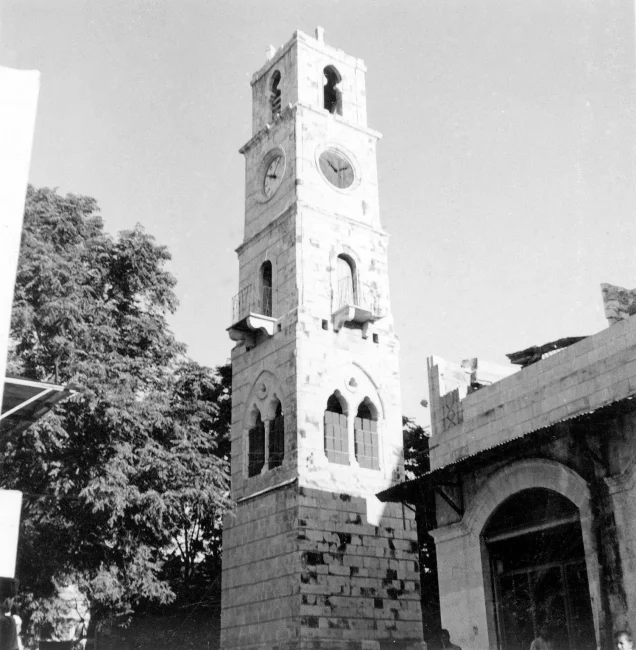
Nablus was famous for knafeh and its white cheese, and for tahini, halawa, nigella paste (qizha) and other foods. The Nablus Municipality describes knafeh as a dish of celebrations and hospitality, and it became one of the things most associated with the city’s name. [1][9]
More: Popular dishes of Nablus: knafeh, tamriyya and cheese.
The hammam: bathing, meeting and the groom’s procession
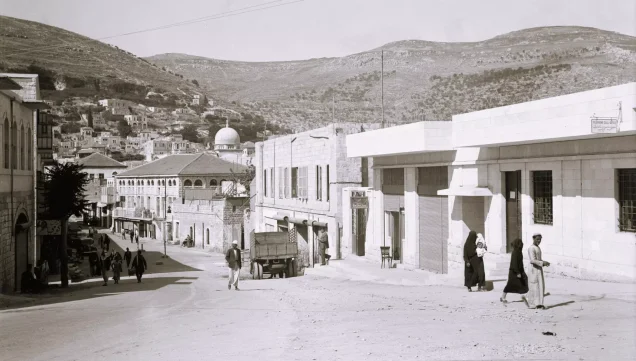
The bathhouses were among the city’s social institutions, including al-Shifa, al-Samra, al-Qadi and al-Baydara. According to researchers and residents quoted by the Dooz website, the hammam was a place for bathing and meeting, with separate hours for women and men. [10]
Mothers came with their children and clothes wrapped in a bundle (buqja), men sat in the reception hall to talk, and some hammams were tied to the groom’s wedding procession. [10]
Ramadan, feasts, outings and customs
Local writing on Nablus preserves scenes of Ramadan and Eid: family gatherings, visits to relatives, gifts of money for children (eidiyya) and children’s songs. It also mentions the shatahat, outings in which women and children went to orchards and open land with food and spent the day outside the home. [11]
Weddings brought relatives and neighbours together around hospitality, sweets, clothes and visits, though the details varied between families and their means. [11]
Read also: The Palestinian wedding and its customs.
Education: schools for boys and girls
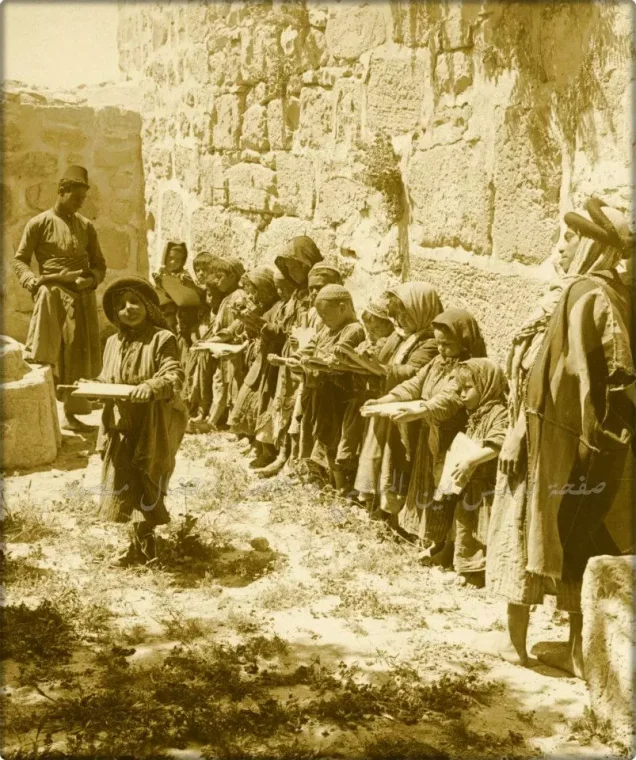
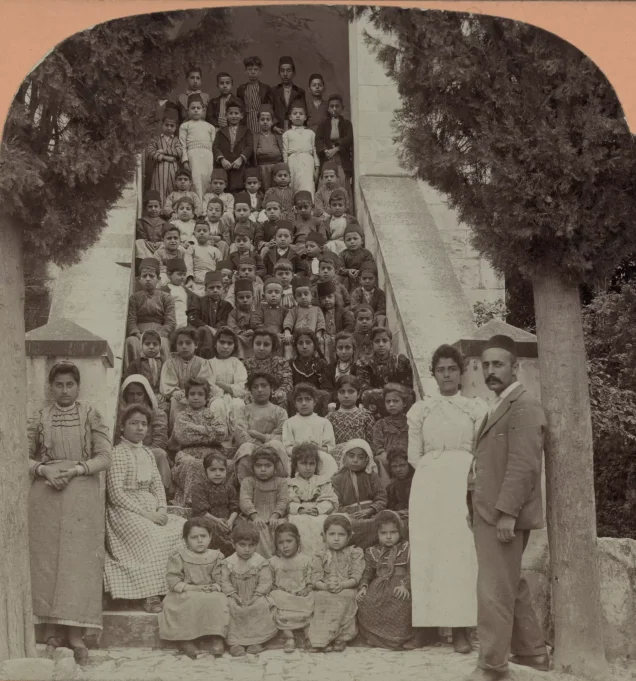
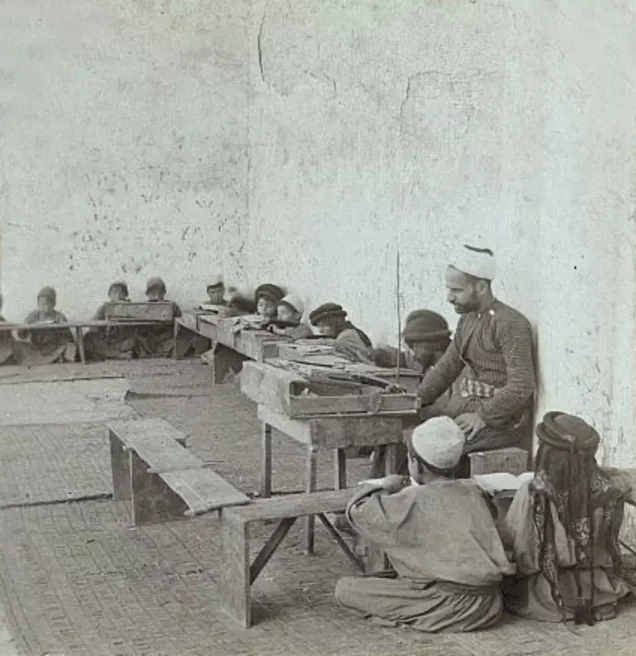
Schools expanded in Nablus before the Nakba. In 1944 the city had nine government schools, five for boys and four for girls, with about 1,676 boys and 1,262 girls. Secondary education was completed at al-Salahiyya school in the 1947/48 school year. [12]
The villages of the district, by contrast, had only 37 schools for about 130 villages, 35 for boys and two for girls, a wide gap between city and countryside and between the sexes. [12]
Read also: Palestinian education before 1948.
An-Najah: a national school that became a college
An-Najah began in 1918 as a school that took pupils from Palestine and neighbouring Arab countries, became An-Najah National College in 1941, and became a university in 1977. [13]
Its boarding section took students from outside the city: in 1944 it had 361 students, 107 of them boarders. Alongside government and mission schools, An-Najah was part of society’s effort to build its own national institutions. [12][13]
Women: education, civic work and social limits
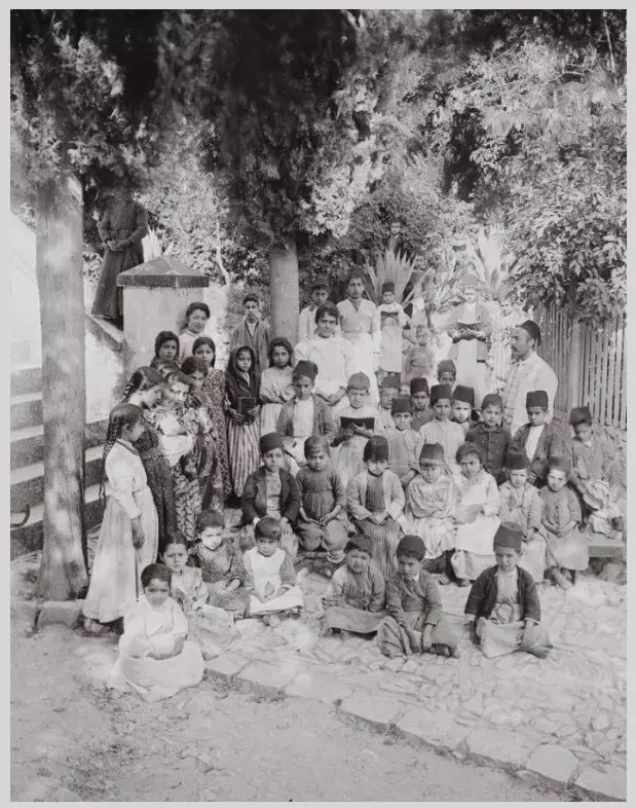
The story of Nablus is incomplete without its women. The Arab Women’s Union Society dates its beginnings to 1921 and names Mariam Hashem among its founders; it worked to fight illiteracy and to help the needy, the wounded and orphans. [14]
At the same time, the life of Fadwa Tuqan reveals the restrictions some girls faced: she was taken out of school for social reasons, then continued learning with the help of her brother Ibrahim. [22]
Read also: Palestinian women before the Nakba.
Health: the National and Evangelical hospitals
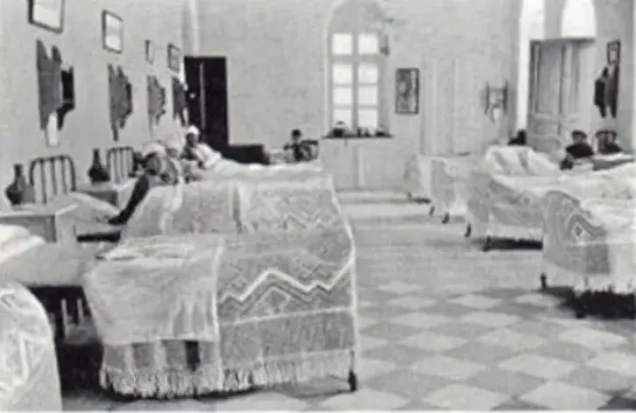
Nablus was a centre for medical care. The Ministry of Health dates the founding of the National Hospital to 1888, in the Ottoman period, and local people contributed to building and developing it. A wing was added in 1940, with expanded surgical, maternity and infectious-disease facilities, and by the end of the Mandate it had about 144 beds. [15][16]
The Evangelical Hospital also served the city; the foundation stone of its building was laid on 17 May 1900, according to the study “The Bimaristans of Nablus”. [17]
Mothers, children, public health and the countryside
In 1928 women of Nablus set up a child welfare centre caring for children and pregnant women, extending health care toward prevention and follow-up. [17]
Health also meant water, cleanliness and the inspection of facilities, overseen by the municipality and documented in its files. But access remained unequal: in the early 1930s the government doctor in centres including Nablus was responsible for visiting dozens of villages. [18][20][29]
Read also: Medicine and health in Palestine before the Nakba.
Poetry and culture: Ibrahim and Fadwa Tuqan
Ibrahim Tuqan was born in Nablus in 1905, returned after his studies to teach at An-Najah, then worked at the Jerusalem radio station, and died in 1941. [21]
His sister Fadwa carried questions of home, education and freedom through her life, then lived through the Nakba and wrote about it. The lives of the two siblings show the city as a place of reading, poetry and debate, alongside its industrial and commercial image. [22]
Read also: Palestinian poets before the Nakba.
Nablus against the Mandate
Nablus was prominent in the national movement under the Mandate. Among its sons was Akram Zuaiter, who combined teaching, journalism and political work and helped organise national activity. [23]
In April 1936 the city led the great strike. Its National Committee issued a statement dated 19 April, published in the press the next day, calling for the general strike to continue until the national committees met, for similar committees to be formed in other towns and for villagers to be involved, and demanding “an immediate halt to immigration”. National committees then spread across Palestine to run the strike and the revolt. [32][30]
People paid for this struggle in their daily lives: a strike meant a closed shop or workshop and lost income, and an arrest meant a family without its breadwinner. [14][23][30]
The 1927 earthquake: a city that rebuilt itself
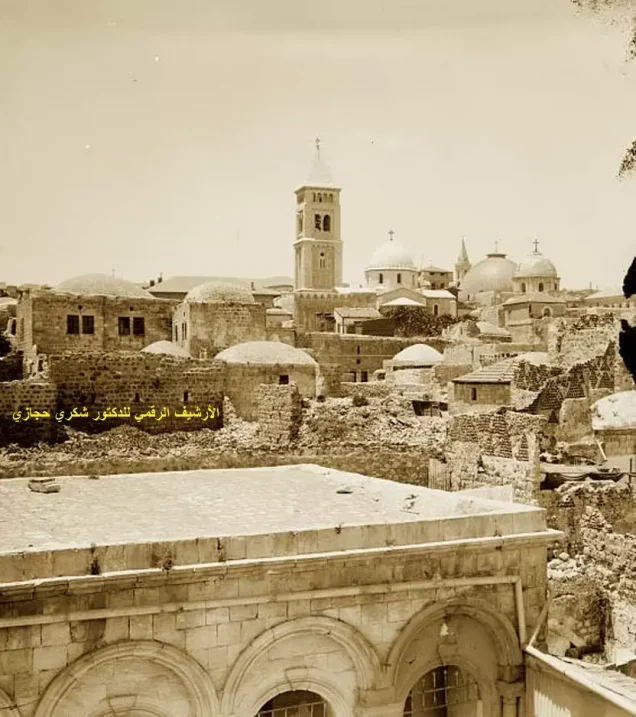
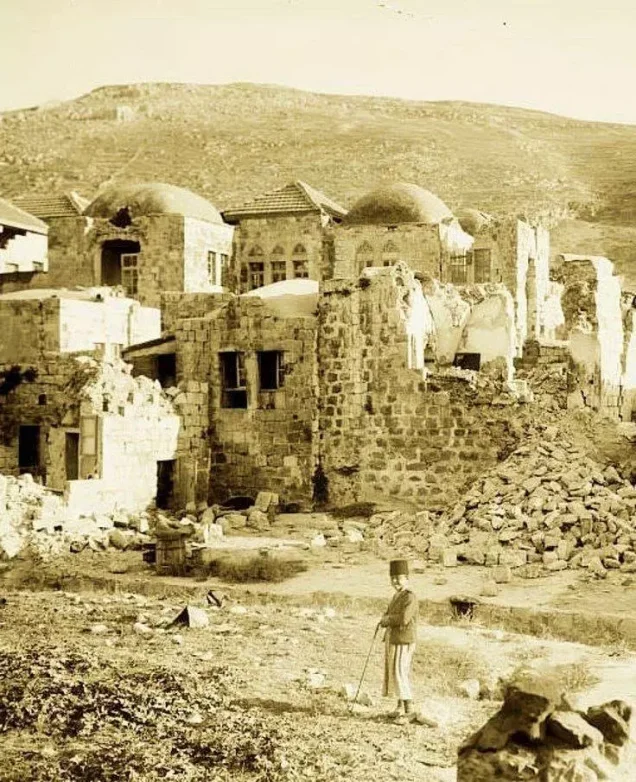
On 11 July 1927 a strong earthquake struck the region and caused heavy damage in Nablus. Urban studies and municipal records document the housing of those affected, the repair of buildings and expansion beyond the old core; the city that took in refugees two decades later also carried the memory of disaster and reconstruction. [19][20]
The Nakba: a city that stayed, markets that were cut off
Nablus remained outside the control of Israeli forces in the 1948 war. Iraqi army units reached the city, and Omar Ali’s force set out from there to break the siege of Jenin, joined by fighters from Nablus and its villages. In May 1949 the Iraqi army withdrew under an agreement between Jordan and Iraq, and Jordanian forces took its place. [33]
But the city’s survival did not mean the survival of its economic space. With the occupation of the Palestinian coast, Nabulsi soap lost its market in historic Palestine, the Egyptian market closed to it too, and Transjordan became its main market. [5]
At the same time, demand for food rose with the arrival of refugees, and the al-Ni‘ma mill faced pressure for flour in a reality where the population and the food market had changed. [7]
Refugees in the city: shelter, relief and care
Refugee life did not begin in the camps. According to local accounts, some of the displaced stayed in schools, mosques and bathhouses, including the al-Khalili hammam, which sheltered people expelled from the coast. [10]
The Women’s Union Society organised fundraising, aid to the displaced and first aid during the 1948 war, and helped care for the wounded at al-Shahba hospital. [14]
Balata, Askar and Ein Beit al-Ma’
In 1950 UNRWA set up three camps in Nablus to shelter refugees driven out by Zionist forces in the Nakba of 1948. [24][25][26]
| Camp | Founded (UNRWA) | Location and origins of residents |
|---|---|---|
| Balata | 1950 | East of Nablus, on the lands of Balata village; residents from dozens of villages in the Lydda, Ramle and Jaffa areas |
| Askar | 1950 | On the eastern edge of the Nablus area; expanded into “New Askar” in 1965 |
| Ein Beit al-Ma’ (Camp No. 1) | 1950 | West of the city along the Jenin road; residents from Lydda, Jaffa and Haifa, and of Bedouin origin |
Balata camp was built on land the Jordanian government leased from the lands of Balata village. It began with about 5,000 refugees; today more than 23,000 live on less than a quarter of a square kilometre, making it one of the most crowded camps in the West Bank. [31]
Ein Beit al-Ma’ camp takes its name from a spring that supplied the refugees with water. [26]
Read also about villages whose people the occupation drove to Nablus, including Yazur, Salama and al-Khayriyya, and about Palestinian refugee camps, depopulated villages and Zionist massacres.
The Nakba’s impact on education, health and work
The Nakba placed on Nablus responsibilities far beyond the needs of its own residents: families who had lost their homes needed shelter, their children schools, their sick treatment and their breadwinners work. The city’s institutions and societies, and later UNRWA, carried part of this burden. [10][14][24][25][26]
The refugees did not arrive as numbers: they brought skills in trades, farming and teaching, and the memory of their villages and towns. After the Nakba, the history of Nablus became that of a host community and of communities uprooted from their homes, living together without exile cancelling their right of return.
From the Nakba to occupation: Nablus after 1948
Nablus was annexed to Jordan in 1950, occupied by the Israeli army in June 1967, and in 1995 became one of the cities under the Palestinian National Authority under the Oslo Accords. [34]
Yet the occupation never left the life of the city and its camps. Balata camp faces repeated raids in which the occupation army imposes sieges and curfews; on 27 July 2024, two Palestinians were killed and 22 wounded in one such raid, according to the Palestinian Ministry of Health. [31]
Nablus thus carries two memories today: that of the city that stayed in 1948 and took in the refugees, and that of the camps whose people are still paying the price of occupation more than seven decades after their expulsion.
Frequently asked questions about Nablus before the Nakba
Why is Nablus called Nablus?
The Arabic name derives from “Neapolis”, the “new city”, the name of the Roman city founded in the first century CE. [1][3]
What was Nablus’s population before the Nakba?
The city had 23,250 people in 1945, up from 15,947 in 1922, not counting the villages of the district. [2]
Was Nablus occupied in 1948?
No. It stayed outside the control of Israeli forces in the 1948 war and was occupied in June 1967. But it took in refugees and lost its coastal markets. [1][5][34]
What was Nablus known for before the Nakba?
For olive oil and Nabulsi soap, for knafeh, cheese and sweets, and for the al-Ni‘ma mill, the match factory and Khan al-Tujjar. [5][7][8][9]
Did An-Najah University exist before the Nakba?
It was a school from 1918, then An-Najah National College from 1941, and became a university in 1977. [13]
When were the Nablus refugee camps set up?
UNRWA set up the Balata, Askar and Ein Beit al-Ma’ camps in 1950 to shelter refugees expelled in the Nakba of 1948. [24][25][26]
How did the Nakba affect Nablus’s economy even though the city stayed?
Nabulsi soap lost its market in historic Palestine and in Egypt, while the need for food, housing and services grew with the arrival of refugees. [5][7]
Read also on Palestinuna
- Nablus: landmarks and historical photographs
- Nabulsi soap
- Popular dishes of Nablus
- Balata camp
- Askar camp
- Ein Beit al-Ma’ camp
- Palestine before the Nakba
Sources and references
- Palestinian National Information Center – WAFA, “Nablus” (in Arabic).
- Palestine Remembered, “Nablus,” population tables from Mandate censuses and statistics (in Arabic).
- “Historic Nablus and Its Surroundings,” State of Palestine submission to the UNESCO Tentative List.
- Palestinian National Information Center – WAFA, “Soap Making” (in Arabic).
- Institute for Palestine Studies – PalQuest, “Nabulsi Soap Production” (in Arabic).
- UNESCO, “Tradition of Nabulsi Soap Making in Palestine”.
- Shaden Awad and Manal Bishawi, “Building, Demolition and In Between: The al-Ni‘ma Mill in Nablus,” Jerusalem Quarterly, no. 69.
- Library of Congress, photographs of Arab factories in Nablus: the match factory, 1940.
- Nablus Municipality, “Traditional Industries” (in Arabic).
- Sabreen Azriel and Majd Hussein, “What Became of Nablus’s Hammams Sixty Years after They Closed?” Dooz, 2017 (in Arabic).
- Lutfi Zaghloul, “Nablus: Characteristics, Customs and Traditions,” Nablus City website (in Arabic).
- Palestinian National Information Center – WAFA, “Education under the British Mandate,” Nablus district section (in Arabic).
- An-Najah National University, “History and Traditions”.
- Arab Women’s Union Society of Nablus, “About the Society” and history of its activities (in Arabic).
- Palestinian Ministry of Health, “The National Government Hospital: 2016 Review” (in Arabic).
- Multi-Community Resource Center, “The National Hospital” (in Arabic).
- “The Bimaristans of Nablus,” study published by An-Najah National University (in Arabic).
- “Health Conditions in Nablus under the British Mandate, 1922–1948,” An-Najah University repository (in Arabic).
- “Urban Development in Nablus under the British Occupation, 1922–1948,” An-Najah University repository (in Arabic).
- Nablus Municipality Public Library, “Nablus Municipality Documents and Files” (in Arabic).
- Palestinian National Information Center – WAFA, “Ibrahim Tuqan” (in Arabic).
- Palestinian National Information Center – WAFA, “Fadwa Tuqan” (in Arabic).
- Palestinian National Information Center – WAFA, “Akram Zuaiter” (in Arabic).
- UNRWA, “Balata Camp”.
- UNRWA, “Askar Camp”.
- UNRWA, “Camp No. 1 – Ein Beit al-Ma’” (in Arabic).
- Nablus Municipality, “The Old City” (in Arabic).
- Multi-Community Resource Center, “Nablus Railway Station” (in Arabic).
- Frances S. Hasso, “Making the Country Pay for Itself,” chapter in Buried in the Red Dirt, Cambridge University Press.
- Palestinian Encyclopedia, “The National Committees” (in Arabic).
- Al Jazeera Encyclopedia, “Balata Camp: One of the Largest Camps in the West Bank,” 29 July 2024 (in Arabic).
- Institute for Palestine Studies, “Statement by the National Committee in Nablus,” 19 April 1936.
- “The Iraqi Officer Who Liberated Jenin during the Nakba: Omar Ali, Commander of the Iraqi Army in Palestine,” Arabi Post, 21 July 2022 (in Arabic).
- Al Jazeera Encyclopedia, “Nablus, ‘Mountain of Fire’: A Historic City between Two Mountains” (in Arabic).
More from the archive
 Download Our Palestine App
The whole archive in the palm of your hand: depopulated villages, the Nakba, the massacres and Al-Aqsa — free, with no ads to erase the story.



Comments
No comments yet — be the first to write one.
Add your comment
Name and email are optional. Comments appear after review.