
First Fedayeen Buried in Yarmouk Camp Martyrs Cemetery
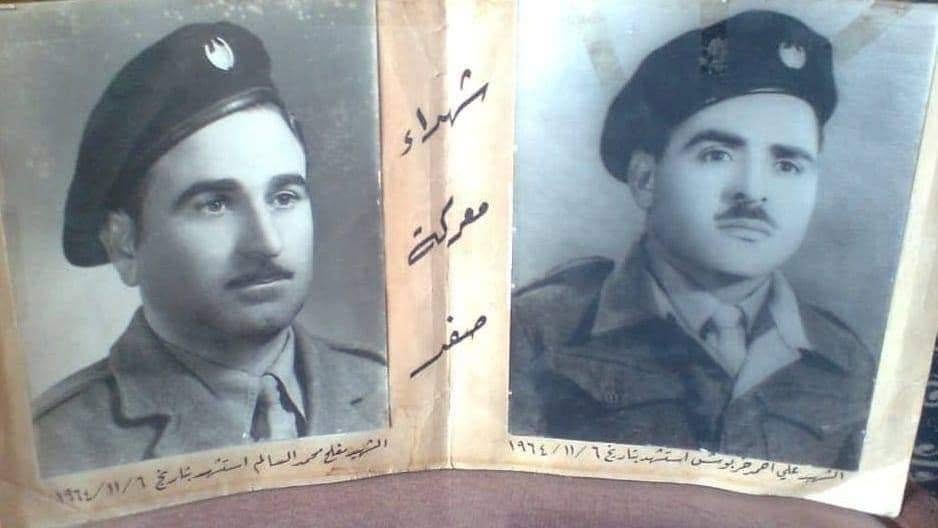
In Yarmouk camp south of Damascus, the largest gathering of Palestinian refugees in Syria, lies the “Martyrs’ Cemetery,” resting place of generations of fedayeen and leaders. The first to be buried there were two fighters from Galilee whom the occupation would not allow to be buried in their own villages. [1][2]
They were the martyrs Mufleh Muhammad al-Salem of Saffuriyya in the Nazareth district and Ali al-Kharboush of Arraba al-Battuf in the Acre district, buried together on 7 November 1964, opening the first martyrs’ cemetery outside Palestine. [1][2][3]
Contents
- The two martyrs at a glance
- Battalion 68: fedayeen before the launch
- The operation in Galilee
- The first Martyrs’ Cemetery
- Guardian of memory
- Frequently asked questions
The two martyrs at a glance
| Item | Mufleh Muhammad al-Salem | Ali al-Kharboush |
|---|---|---|
| Home village | Saffuriyya, Nazareth district | Arraba al-Battuf, Acre district |
| Unit | Palestinian Fedayeen Battalion 68 of the Syrian army | |
| Where killed | A fedayeen operation in Galilee, northern occupied Palestine | |
| Date killed | 4 November 1964, according to Ali Badwan | |
| Buried | 7 November 1964, first Martyrs’ Cemetery, Yarmouk camp | |
Battalion 68: fedayeen before the launch
The two men were fighters in the Palestinian Fedayeen Battalion 68 of the Syrian Arab Army, a reconnaissance battalion founded in 1949 from the sons of Palestinian refugees, which carried out operations inside occupied Palestine years before the armed Palestinian factions were launched. [1][2]
The operation in Galilee
Mufleh al-Salem and Ali al-Kharboush were killed during a fedayeen mission in Upper Galilee, northern Palestine; in the same battle their comrade Omar Arifa was wounded and captured. The writer Ali Badwan dates their deaths to 4 November 1964. [1][3]
The occupation authorities refused to let them be buried in their villages of Saffuriyya and Arraba al-Battuf, so their bodies were transferred to Syria through the International Committee of the Red Cross and they were given a large official and popular funeral in Yarmouk camp. [1]
Mufleh al-Salem was a son of Saffuriyya, a village whose people Zionist forces drove out in 1948; sixteen years later he returned to its land as a fighter. [1]
The first Martyrs’ Cemetery
The first Martyrs’ Cemetery, known today as the old cemetery, was established in the mid-1960s near Harat al-Maghariba on the edge of Yalda, the first resting place for Palestine’s martyrs outside their homeland. Before it, Palestinians buried their dead in Damascus cemeteries, among them al-Dahdah. [2][3]
After them, the third to be buried there was Lieutenant Muhammad Hishma, killed in an accident at a Fatah position in al-Shaalan. Fedayeen funerals followed, among them that of Munhal Shadid of Allar in the Tulkarm district in February 1967, attended by Yasser Arafat. [2]
When the first cemetery filled up, a new Martyrs’ Cemetery opened in 1980 on 50 dunams at the end of Yarmouk Street; Palestinian leaders buried there include Fathi al-Shiqaqi, secretary-general of Islamic Jihad (1995), Jihad Jibril (2002) and Izz al-Din al-Sheikh Khalil (2004). [3][4]
Guardian of memory
The two martyrs’ cemeteries became part of Yarmouk’s identity, where families and factions commemorate their dead and the gravestones carry the names of Palestine’s towns and villages. During the war in Syria the old cemetery was damaged, and in June 2019 Russian forces dug it up. [3][5]
The graves of Mufleh al-Salem and Ali al-Kharboush, the first two fighters buried there, remain witnesses to a generation that carried the names of Saffuriyya and Arraba from the camp to Galilee, and came back as martyrs to the land of exile because the occupation barred them from returning to their villages even in death.
Frequently asked questions
Who was the first fighter buried in Yarmouk camp’s Martyrs’ Cemetery?
Two martyrs were buried there first, together: Mufleh Muhammad al-Salem of Saffuriyya and Ali al-Kharboush of Arraba al-Battuf, on 7 November 1964. [1][2]
Where were they killed?
In a fedayeen operation in Galilee, northern occupied Palestine. [1]
Which unit did they belong to?
The Palestinian Fedayeen Battalion 68 of the Syrian army, founded in 1949. [1]
Why were they buried in Yarmouk rather than their villages?
Because the occupation refused to allow their burial in Saffuriyya and Arraba al-Battuf, so their bodies were sent to Syria through the Red Cross. [1]
Who was the third person buried there?
Lieutenant Muhammad Hishma, killed in an accident at a Fatah position in al-Shaalan. [2]
When did the new Martyrs’ Cemetery open?
In 1980, on 50 dunams at the end of Yarmouk Street. [3]
Which leaders are buried in the new cemetery?
Among them Fathi al-Shiqaqi (1995), Jihad Jibril (2002) and Izz al-Din al-Sheikh Khalil (2004). [3]
Read also on Palestinuna
Sources and references
- Ali Badwan, “The First Two Martyrs in the Palestine Martyrs’ Cemetery in Yarmouk,” Diwan al-Arab, 4 July 2018 (in Arabic).
- Ali Badwan, “The Palestine Martyrs’ Cemetery in Yarmouk,” Diwan al-Arab, 2 May 2019 (in Arabic).
- Hussam Zeidan, “The Martyrs’ Cemetery in Yarmouk: Guardian of Palestinian Memory,” al-Manar, 19 December 2019 (in Arabic).
- Khalil al-Samadi, “Landmarks of the Camp,” from Memories of Yarmouk Camp, Romman Magazine (in Arabic).
- “Yarmouk Camp: The Russians Dig Up the Old Martyrs’ Cemetery,” al-Modon, 11 June 2019 (in Arabic).
More from the archive
 Download Our Palestine App
The whole archive in the palm of your hand: depopulated villages, the Nakba, the massacres and Al-Aqsa — free, with no ads to erase the story.



Comments
No comments yet — be the first to write one.
Add your comment
Name and email are optional. Comments appear after review.