
Jaffa Revolt 1921: Palestine's First Uprising against Zionist Immigration
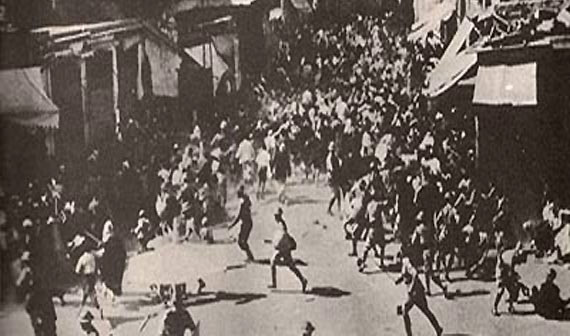
The Jaffa Revolt, or the May 1921 uprising, was the first broad popular uprising by Palestinians against the British occupation’s policy of opening Palestine to Zionist immigration in fulfilment of the Balfour Declaration. It broke out in Jaffa on 1 May 1921, spread to the villages and towns of the coastal plain, and lasted about fifteen days before British forces crushed it with guns and aircraft. [1][2]
According to Palestinian sources, 157 Palestinians were martyred and about 700 wounded, most by British army fire, and the British commission of inquiry itself acknowledged that the revolt’s roots lay in the “Jewish national home” policy. [1][2]
Contents
- The revolt at a glance
- Background: the Balfour Declaration and open immigration
- The outbreak in Jaffa
- The revolt spreads
- British repression and the toll
- The Haycraft Commission: a British admission
- Consequences
- Timeline
- Frequently asked questions about the Jaffa Revolt
The revolt at a glance
| Item | Details |
|---|---|
| Dates | About 1–15 May 1921 |
| Place | Jaffa, spreading to the villages of the coastal plain and to Qalqilya, Tulkarm, Ramla and Lydda |
| Trigger | A Zionist demonstration in Tel Aviv that moved into Jaffa’s Manshiyya quarter |
| Root cause | The Balfour Declaration, Zionist immigration and the denial of Palestinian self-rule |
| Palestinian martyrs | 157 killed and about 700 wounded, according to Palestinian sources |
| Other side | 47 killed and 146 wounded |
| Outcome | Revolt crushed; immigration briefly suspended; British commission of inquiry |
Background: the Balfour Declaration and open immigration
After Britain occupied Palestine in the First World War, its authorities began implementing the Balfour Declaration, opening the country to Zionist immigration; the port of Jaffa was the main gateway for the immigrants. Popular anger rose after the Nabi Musa festival events in Jerusalem in April 1920. [1][2]
In March 1921 Palestinians held their Third Arab Palestinian Congress in Haifa, rejecting the Mandate and the Balfour Declaration and demanding an end to Jewish immigration and a national government. The Zionist movement responded with expansionist demands and the flow of immigrants into Jaffa grew; its people protested and threatened to stop them landing, and the boatmen boycotted the ships that carried them. [2]
Zionist reports from the period, Al Jazeera English notes, admitted that the “unnatural” expansion of the settler community into Jaffa and its orchards fed the tension, yet Zionist leaders kept pressing for unlimited immigration. [4]
The outbreak in Jaffa
On 1 May 1921 a large Zionist demonstration marched in Tel Aviv for Labour Day, and part of it headed into Jaffa’s Manshiyya quarter, setting off bloody clashes with its residents. Shots were fired at Arab passers-by, and residents responded by attacking a hostel for newly arrived Zionist immigrants. [2][3][4]
On 2 May Zionists attacked Jaffa again and then the village of al-Abbasiyya (al-Yahudiyya), widening the confrontation, and Arabs responded by attacking the surrounding Zionist colonies. [2]
One Palestinian account says members of the British army’s “Jewish Battalion,” issued rifles on the pretext of defending Tel Aviv, slipped into Jaffa and fired on Arabs in British uniform, so Jaffa’s residents demanded that the British troops be replaced by Indian soldiers. [3]
The revolt spreads
The clashes spread from Jaffa to Qalqilya, Tulkarm, Ramla and Lydda, and villagers rose against the Zionist colonies built on their land. On 5 May about three thousand Palestinians gathered north of the Petah Tikva colony (Mulabbis); Mandate forces confronted them and opened fire, killing about 60. [2][1]
On 6 May hundreds of villagers attacked the colonies of Hadera and Rehovot; the Royal Air Force intervened and bombed them until they withdrew, and Indian cavalry units of the British army also took part. Attacks also reached the colony of Kfar Saba. [3]
British repression and the toll
The Mandate authorities first turned to Palestinian leaders, among them Musa Kazim al-Husseini, Hajj Amin al-Husseini and Patriarch Barlassina, to calm the situation until military reinforcements arrived from Suez and Cyprus, and then crushed the revolt by force after about fifteen days. [2][1]
According to Palestinian sources, Arab losses were 157 martyrs and about 700 wounded, most of them shot by the British army, while 47 Zionists were killed and 146 wounded. The official British figures acknowledged only 48 Arab dead. [1][2][4]
| Source | Arab dead | Zionist dead |
|---|---|---|
| Palestinian sources (WAFA, Palestinian Encyclopedia) | 157, and about 700 wounded | 47, and 146 wounded |
| Official British figures | 48 | 47 |
British military courts handed down harsh sentences on the rebels, including fifteen years in prison for Sheikh Shaker Abu Kishk, and imposed collective fines on the Abu Kishk Arabs and on Qalqilya, Tulkarm and Qaqun. [2]
The Haycraft Commission: a British admission
The British government set up a commission of inquiry headed by Palestine’s Chief Justice Thomas Haycraft, whose report concluded that the basic cause of the revolt was Arab discontent and hostility arising from political and economic causes connected with Jewish immigration and with how Arabs understood Zionist policy. [5]
According to Palestinian sources, the commission linked the revolt to the policy of a Jewish national home, to Arab resentment of the government’s favouritism toward Jews, and to their being denied self-rule. Yet it also praised the conduct of the British military as “admirable throughout,” even though most of the martyrs fell to its bullets. [2][1][5]
Consequences
The revolt forced the Mandate authorities to suspend Jewish immigration temporarily from 14 May 1921, and on 3 June 1921 High Commissioner Herbert Samuel declared that Britain would not impose a policy contrary to the interests of the Palestinian people, a statement meant to calm things down that changed nothing in British policy. [3]
On 25 June 1921 Palestinians held their Fourth Congress in Jerusalem and decided to send a delegation to London; its negotiations came to nothing and it returned to Palestine in August 1922. Ten days after the revolt the authorities recognised Tel Aviv as a town separate from Jaffa. [2][4]
The Jaffa Revolt was an early milestone in a long road of Palestinian resistance to the Zionist project and British occupation, followed by the Buraq Revolt of 1929 and the Great Revolt of 1936. [1]
Timeline
| Date | Event |
|---|---|
| 4 April 1920 | The Nabi Musa festival events in Jerusalem [1] |
| March 1921 | Third Arab Palestinian Congress in Haifa rejects the Mandate and the Balfour Declaration [2] |
| 1 May 1921 | Zionist demonstration enters Manshiyya; revolt breaks out in Jaffa [2] |
| 2 May 1921 | New Zionist attack on Jaffa and al-Abbasiyya [2] |
| 5 May 1921 | About 3,000 Palestinians gather near Mulabbis (Petah Tikva); about 60 killed by British fire [2] |
| 6 May 1921 | Attacks on Hadera and Rehovot; British air strikes [3] |
| 14 May 1921 | Temporary suspension of Jewish immigration [3] |
| 3 June 1921 | Herbert Samuel’s statement [3] |
| 25 June 1921 | Fourth Palestinian Congress in Jerusalem decides to send a delegation to London [2] |
| October 1921 | Haycraft Commission report issued [5] |
Frequently asked questions about the Jaffa Revolt
When did the Jaffa Revolt break out?
On 1 May 1921; it lasted about fifteen days. [1]
What caused the 1921 Jaffa Revolt?
The British occupation’s implementation of the Balfour Declaration and its opening of Palestine to Zionist immigration; the spark was a Zionist demonstration that entered Jaffa’s Manshiyya quarter. [2][5]
How many Palestinians were killed?
157 killed and about 700 wounded according to Palestinian sources, most by British army fire; official British figures acknowledged 48 Arab dead. [1][4]
Where did the revolt spread?
To Qalqilya, Tulkarm, Ramla and Lydda, and around the colonies of Petah Tikva, Hadera, Rehovot and Kfar Saba. [2][3]
What was the Haycraft Commission?
A British commission of inquiry headed by Chief Justice Thomas Haycraft, which traced the revolt to Arab discontent over Jewish immigration and Zionist policy. [5]
What were the revolt’s results?
A temporary halt to Jewish immigration, Herbert Samuel’s statement of 3 June 1921 and a Palestinian delegation to London, but British policy did not change. [3][2]
Read also on Palestinuna
- The Nabi Musa uprising, 1920
- The Buraq Revolt, 1929
- The 1936 Revolt
- The fall of Jaffa, 1948
- Battles archive
Sources and references
- WAFA – Palestinian National Information Centre, “Battles and Revolts in Palestine” (in Arabic).
- Palestinian Encyclopedia, “Jaffa (Revolt)” (in Arabic).
- “The Great Jaffa Revolt against Jewish Immigration to Palestine, 1921,” Yaffa48 (in Arabic).
- Mark LeVine and Mathias Mossberg, “Why the events in Jaffa of May 1, 1921 are important today,” Al Jazeera English, 2 May 2021 (opinion).
- Institute for Palestine Studies – Interactive Encyclopedia, “Report by the Haycraft Commission of Inquiry into the May 1921 Jaffa Riots”.
More from the archive
 Download Our Palestine App
The whole archive in the palm of your hand: depopulated villages, the Nakba, the massacres and Al-Aqsa — free, with no ads to erase the story.



Comments
No comments yet — be the first to write one.
Add your comment
Name and email are optional. Comments appear after review.