
Battle of Bal'a 1936: Palestinian Rebels Down British Planes near Tulkarm
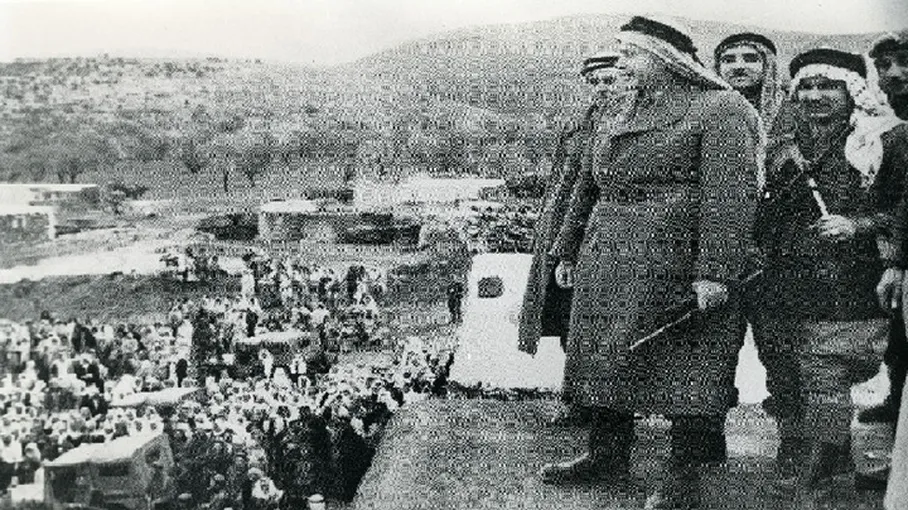
The Battle of Bal’a was one of the largest battles of the first phase of the Great Palestinian Revolt. It took place on 3 September 1936 near the village of Bal’a, east of Tulkarm, on the Tulkarm–Nablus road. Palestinian rebels and Arab volunteers led by Fawzi al-Qawuqji attacked a British military column sent to protect a Zionist convoy, fought it and its reinforcements for some ten hours, and brought down several of its aircraft. [1][2]
The newspaper Filastin called it at the time “the largest battle in the history of the present Palestinian revolt,” historians count it a model of organised popular armed action, and it pushed Britain to declare a state of emergency and flood Palestine with troops. [2][1]
Contents
- The battle at a glance
- Background: the great strike and the volunteers
- The course of the battle
- Results
- Aftermath: emergency rule and repression
- Differences between the accounts
- Timeline
- Frequently asked questions about the Battle of Bal’a
The battle at a glance
| Item | Details |
|---|---|
| Date | 3 September 1936 |
| Place | Near the village of Bal’a, about 7 km from Tulkarm, on the Tulkarm–Nablus road |
| Commander | Fawzi al-Qawuqji |
| Palestinian and Arab force | Between 50 and 300 fighters by different accounts, from Palestine, Syria, Iraq and Transjordan |
| British force | A column of 20 military vehicles with tanks, then reinforcements reaching about 5,000 soldiers and 15 aircraft |
| Duration | About 10 hours |
| Martyrs | About 16, including volunteers from Iraq and Syria |
| British losses | 80 killed according to Palestinian sources; two aircraft shot down and two more burned |
| Context | The first phase of the Great Palestinian Revolt, 1936–1939 |
Background: the great strike and the volunteers
The Great Palestinian Revolt began in April 1936 with a sweeping general strike against the British occupation and its policy of opening Palestine to Zionist immigration, and the strike quickly turned into an armed revolt in the hills and countryside. [3]
In late August 1936 Fawzi al-Qawuqji entered Palestine at the head of a vanguard of Arab volunteers, put by one account at about 190 fighters: a hundred from Iraq, sixty from Syria under Sheikh Muhammad al-Ashmar and thirty Druze under Hamad Sa’b. They joined the Palestinian rebels; al-Qawuqji took over the revolt’s general command and set up his headquarters at Dhahrat al-Jum’a near Bal’a, moving it constantly to avoid British detection. [4]
Read also: The 1936 Revolt.
The course of the battle
A Zionist convoy used the road daily, so the British authorities ordered their army to protect it and sent a column of 20 military vehicles with tanks and troops. The fighters lay in wait in the hills above the road near Bal’a, armed with rifles, light machine guns and a few mines, organised into attack and defence units, while people from the nearby villages supplied them and brought intelligence. [1][2]
Once the fighting began, the British called in troops from Nablus until their numbers on the battlefield reached about five thousand, and 15 aircraft took part in bombing the rebels’ positions. The memoirs of Sheikh Bahjat Abu Gharbiyya record that machine guns carried by the Iraqi volunteers helped hit the British planes. [1][2]
The rebels shot down two British aircraft and burned two more, while Filastin reported four planes down: one at the battle site, one near Anabta, one at Ras Amer and one at the airfield. The fighting went on for about ten hours before the fighters withdrew into the hills. [1][2]
Results
Palestinian sources say 80 British officers and soldiers were killed in the battle, and about 16 fighters were martyred, among them volunteers from Iraq and Syria. [1][2]
The official British statement admitted two pilots killed in a forced landing and an officer who died of his wounds, with two officers and two soldiers wounded, and claimed ten Arabs killed. The same statement admitted that British forces demolished six houses in the village of Bal’a in reprisal against its people. [1]
| Source | British losses | Arab martyrs |
|---|---|---|
| Palestinian sources | 80 killed; two aircraft shot down and two burned | About 16 |
| Filastin newspaper | Four aircraft down | – |
| Official British statement | 3 killed and 4 wounded | 10, with 6 houses demolished in Bal’a |
Aftermath: emergency rule and repression
Bal’a shook the British government, which declared a state of emergency, appointed General John Dill commander-in-chief of its forces in Palestine and Transjordan, sent large reinforcements of troops and equipment, and tightened its repression with mass arrests and executions. [1][2]
The battle lifted the morale of the rebels and the people, encouraged more volunteers from Transjordan and Iraq to join the revolt, and showed that the resistance could organise large operations against an imperial army. [2]
On 11 October 1936 the Arab Higher Committee accepted the appeal of the Arab kings and princes to end the strike after about six months, closing the revolt’s first phase before it resumed with greater force in 1937. [4][3]
Differences between the accounts
The sources differ on some figures: Arabi21 puts the fighters at about fifty volunteers, while Arabi Post puts them at about three hundred. The number of aircraft brought down ranges from two to four, and the gap remains wide between the Palestinian figures and the British statement, which routinely understated its losses. [1][2]
Timeline
| Date | Event |
|---|---|
| April 1936 | The general strike and Great Revolt begin [3] |
| Late August 1936 | Fawzi al-Qawuqji and the vanguard of Arab volunteers arrive [4] |
| 3 September 1936 | Battle of Bal’a: ambush of the British column and aircraft downed [1] |
| September 1936 | State of emergency declared and General John Dill appointed [1] |
| 11 October 1936 | The Arab Higher Committee ends the strike [4] |
Frequently asked questions about the Battle of Bal’a
When was the Battle of Bal’a?
On 3 September 1936, during the first phase of the Great Palestinian Revolt. [1]
Where is Bal’a?
A Palestinian village east of Tulkarm; the battle was fought nearby on the Tulkarm–Nablus road. [1][2]
Who led the rebels at Bal’a?
Fawzi al-Qawuqji, the revolt’s general commander at the time, with Palestinian rebels and volunteers from Syria, Iraq and Transjordan. [1][4]
How many British aircraft were brought down?
Two shot down and two burned according to Palestinian sources, while Filastin reported four planes down. [1][2]
How many were martyred at Bal’a?
About 16, including volunteers from Iraq and Syria. [1]
What did Britain do after Bal’a?
It declared a state of emergency, appointed General John Dill commander-in-chief, sent large reinforcements, demolished houses in Bal’a and stepped up repression. [1][2]
Read also on Palestinuna
- The 1936 Revolt
- The Battle of Nur Shams
- The martyrdom of Izz al-Din al-Qassam
- The Arab Liberation Army
- Battles archive
Sources and references
- Ali Saada, “The Battle of Bal’a: The First Organised Military Operation of the Mujahideen in Palestine,” Arabi21, 4 September 2020 (in Arabic).
- Sanaa al-Hakim, “One of the Strongest Battles of the Great Palestinian Revolt: The Battle of Bal’a,” Arabi Post, 3 September 2024 (in Arabic).
- WAFA – Palestinian National Information Centre, “Battles and Revolts in Palestine” (in Arabic).
- “The 1936 Palestinian Revolt (2/3): Palestine’s Rebels Wage the Longest Strike in History,” al-Jarida (Kuwait), 18 August 2011 (in Arabic).
More from the archive
 Download Our Palestine App
The whole archive in the palm of your hand: depopulated villages, the Nakba, the massacres and Al-Aqsa — free, with no ads to erase the story.



Comments
No comments yet — be the first to write one.
Add your comment
Name and email are optional. Comments appear after review.