
Qaddura Refugee Camp
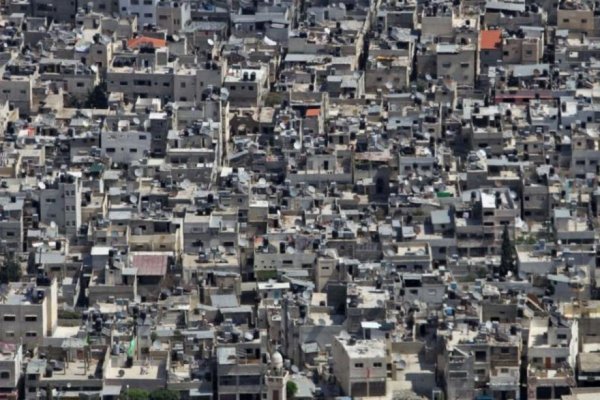
Qaddura Refugee Camp
Qaddura Refugee Camp in Ramallah: History, Population, Villages of Origin and the Right of Return
Qaddura Camp is a small Palestinian refugee camp in the heart of Ramallah, close to the city centre. It was founded in by refugees driven from Lydda, Ramla, Jaffa and villages such as Dayr Tarif, Bayt Nabala, Lifta, Salama and Zakariyya during the occupation of Palestine. Unlike the official camps, Qaddura has never been recognised by UNRWA, and for decades it was left between the agency and the municipality, each considering the other responsible. Today about 1,000 people live in the camp. This guide covers its history, origins, population, living conditions and its place in the struggle for the right of return.
Quick Facts About Qaddura Camp
| Arabic name | مخيم قدورة |
|---|---|
| Country / Region | Palestine, central West Bank |
| Governorate | Ramallah and al-Bireh, inside the city of Ramallah |
| Year established | |
| Status | Unofficial camp, not recognised by UNRWA |
| Population | 924 (PCBS census, 2017); about 977 (PCBS estimate, 2020) |
| Households | 233 households in 119 buildings (PCBS, 2007) |
| Origin of residents | Lydda, Ramla, Jaffa and villages of the Ramla, Jaffa and Jerusalem districts |
| Nearest official camp | Al-Am'ari Camp, about 1 km away |
The Nakba: Why Qaddura Camp Exists
Qaddura Camp was born from the Nakba (Arabic for "catastrophe"): the mass expulsion of Palestinians during the occupation of Palestine in . Roughly 750,000 Palestinians were driven from their homes, and hundreds of villages were emptied and destroyed.
In July 1948, the people of Lydda, Ramla and the surrounding villages were expelled and forced to walk east into the hills. Many reached Ramallah, where they found shelter wherever they could. A group of them settled on a plot of land near the town centre, building shelters of stone covered with tarpaulin. That cluster of shelters became Qaddura Camp.
The Right of Return
The right of return is the central demand of Qaddura's refugees. It rests on several foundations in international law:
- UN General Assembly Resolution 194 (), paragraph 11, resolved that refugees wishing to return to their homes and live at peace with their neighbours should be permitted to do so at the earliest practicable date, and that compensation should be paid to those choosing not to return and for loss of or damage to property.
- The Universal Declaration of Human Rights (Article 13) affirms everyone's right to leave any country, including their own, and to return to it.
- UN General Assembly Resolution 3236 () reaffirmed the "inalienable right" of Palestinians to return to their homes and property.
As residents of the camp put it, whether or not UNRWA recognises Qaddura, they are a community of refugees living together in hardship, and they remain refugees until they return.
History of the Camp
Shelters of stone and tarpaulin (1948–1960s)
The first refugees built small shelters of stone and covered them with tarpaulin. These shelters offered little protection from summer heat or winter cold, and rain leaked through torn covers onto sleeping families. Over time, families rebuilt their homes with stone or concrete blocks, roofed with zinc sheets or concrete. Older residents recall that in the early years the camp held thousands of people, several times its population today.
From camp to city neighbourhood (1960s–1990s)
As Ramallah grew around it, Qaddura became a neighbourhood in the heart of the city. Many families whose circumstances improved moved out in search of better living conditions, and the camp's population fell. With the occupation of the West Bank and Gaza Strip in , the camp came under Israeli military rule.
After Oslo (1995 onward)
After the Israeli redeployment from Ramallah in 1995, the camp came under the Palestinian Authority. In the late 2000s, the Ramallah municipality agreed with the camp's popular committee to treat Qaddura like any other neighbourhood of the city, and allocated land on the edge of the camp for a children's playground.
An Unrecognised Camp
Qaddura is one of five unofficial refugee camps in the West Bank identified by the PLO's Department of Refugee Affairs. According to that department, the two largest, Silwad and Qaddura in Ramallah, are home to at least 5,000 refugees together.
UNRWA does not recognise Qaddura as an official camp because it did not establish the camp or lease its land from the host government. Instead, refugees settled there on their own, some renting their plots from the landowners and others settling without means to pay. In the 1960s and 1970s, UNRWA ran a distribution point and a feeding centre for children in the camp and delivered kerosene and in-kind aid, but these services gradually declined until the agency withdrew entirely. For years, the municipality in turn considered the camp UNRWA's responsibility, and the camp was left between the two, with poor infrastructure, unlit streets and little planning.
Qaddura in the Intifadas
Being in the heart of Ramallah, the camp's young people took part in confrontations with the occupation, both before the 1995 redeployment and during the invasions of 2002. According to the camp's popular committee:
- About 20 people from the camp were killed during the First and Second Intifadas.
- Israeli forces completely destroyed two homes and partly destroyed sixteen others.
- Dozens of the camp's young men were arrested, some held in administrative detention without charge and others sentenced in military courts.
Origin of the Name
The camp is named after the man who owned most of the land in the area at the time. Many refugees rented plots from him for their shelters, at about one hundred piastres a month, and the camp came to be known by his name. It is also spelled Kaddoura or Qaddoura.
Location and Geography
Qaddura Camp lies in the Ramallah and al-Bireh Governorate, inside the city of Ramallah, just outside the downtown area and close to al-Manara Square. The official al-Am'ari Camp lies about 1 km away. Rainwater running down from the al-Manara area flows towards the camp, causing problems for residents in winter.
Villages of Origin
Qaddura's refugees come from many towns and villages depopulated in 1948:
- Cities: Lydda, Ramla and Jaffa
- Ramla district: Dayr Tarif, Bayt Nabala, Al-Haditha and Al-Qubab
- Jaffa district: Salama and Al-Safiriyya
- Jerusalem district: Lifta, and families from Abu Ghosh
- Hebron district: Zakariyya
Population and Demographics
| Year | Population | Source |
|---|---|---|
| Early 1950s | Thousands, according to older residents | Oral testimony |
| 2006 (mid-year) | 1,558 | Palestinian Central Bureau of Statistics (PCBS) |
| 2007 (end of year) | 1,208 people in 233 households, 119 buildings and 289 dwellings | PCBS |
| 2017 | 924 | PCBS census |
| 2020 | About 977 | PCBS estimate |
In 2007, the average household had 5.2 members, and there were about 70 businesses and establishments in the camp. Because Qaddura is not an UNRWA camp, there is no official count of refugees registered to it.
Housing and Infrastructure
The camp is connected to the city's water, electricity and sewage networks, and receives rubbish collection and telephone services. However, years of neglect left it with poor infrastructure, narrow and poorly lit alleys and old homes. Residents have repeatedly complained of blocked sewage manholes overflowing into the entrances of their homes, attracting insects and creating a health hazard, and have appealed to the municipality and the Ministry of Local Government to fix the problem.
Health and Education
Because Qaddura has no UNRWA facilities, its children attend schools in al-Am'ari Camp or UNRWA schools in Ramallah, and residents seek health care at al-Am'ari Camp, about 1 km away. Residents and the camp's popular committee continue to call on UNRWA to recognise Qaddura so that it can receive the same services as other camps.
Frequently Asked Questions About Qaddura Camp
Where is Qaddura refugee camp located?
It lies in the heart of Ramallah, just outside the downtown area, in the Ramallah and al-Bireh Governorate of the central West Bank.
Is Qaddura an official UNRWA camp?
No. Qaddura was founded in 1948 but has never been recognised by UNRWA, because the agency did not establish the camp or lease its land. It is one of five unofficial camps in the West Bank.
How many people live in Qaddura camp?
The Palestinian Central Bureau of Statistics counted 924 people in 2017 and estimated about 977 in 2020.
Why is it called Qaddura?
The camp is named after the man who owned most of the land in the area in 1948, from whom many refugees rented plots for their shelters.
Where do Qaddura's refugees come from?
From Lydda, Ramla and Jaffa, and from villages such as Dayr Tarif, Bayt Nabala, al-Haditha, al-Qubab, Salama, al-Safiriyya, Lifta and Zakariyya.
Conclusion
Qaddura Camp is a small refugee community hidden in the centre of Ramallah, built by families expelled from Lydda, Ramla, Jaffa and the villages around them. Unrecognised by UNRWA and long neglected, it has nonetheless kept its identity as a camp, given martyrs and prisoners in the Intifadas, and held onto the right to return to the villages its families lost in 1948.
More from the archive


 Download Our Palestine App
The whole archive in the palm of your hand: depopulated villages, the Nakba, the massacres and Al-Aqsa — free, with no ads to erase the story.
Download Our Palestine App
The whole archive in the palm of your hand: depopulated villages, the Nakba, the massacres and Al-Aqsa — free, with no ads to erase the story.



Comments
No comments yet — be the first to write one.
Add your comment
Name and email are optional. Comments appear after review.
Social Life
Qaddura is a close community with an active popular committee and a scout group with youth, girls' and music sections. Its residents have kept their identity as refugees even as the camp became part of the city, and they continue to defend their status and their right of return.