
Dheisheh Refugee Camp
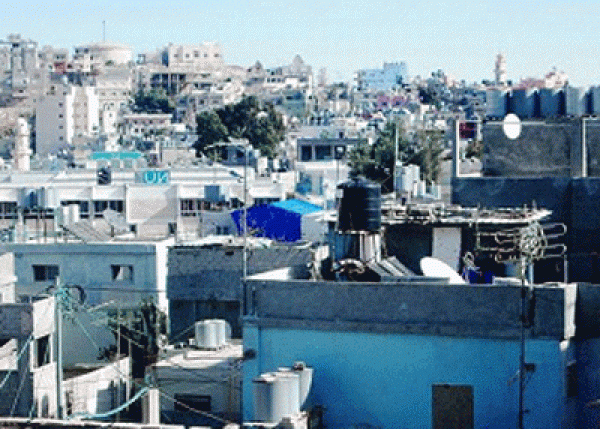
Dheisheh Refugee Camp
Dheisheh Refugee Camp in Bethlehem: History, Population, Villages of Origin and the Current Situation
Dheisheh Camp is the largest Palestinian refugee camp in the southern West Bank, lying about 3 km south of Bethlehem on the Jerusalem–Hebron road. It was established in for about 3,200 refugees from more than 45 villages west of Jerusalem and Hebron, among them Zakariyya, Bayt Itab, Jarash and Bayt Nattif. Once fenced in with barbed wire under occupation, it became known as a centre of political and cultural life. This guide covers its history, origins, population, living conditions and the raids it faces in 2026.
Quick Facts About Dheisheh Camp
| Arabic name | مخيم الدهيشة |
|---|---|
| Country / Region | Palestine, southern West Bank |
| Governorate | Bethlehem, about 3 km south of the city centre |
| Year established | |
| Area | 0.31 km² officially; about 340 dunums today |
| Registered refugees | About 13,000 (UNRWA) |
| Refugees (BADIL estimate) | About 17,503 (end of 2018) |
| Origin of residents | 79 villages, mainly west of Jerusalem and in the Hebron district |
| Known for | The largest camp in the southern West Bank; a centre of political and cultural activism |
The Nakba: Why Dheisheh Camp Exists
Dheisheh Camp was born from the Nakba (Arabic for "catastrophe"): the mass expulsion of Palestinians during the occupation of Palestine in . Roughly 750,000 Palestinians were driven from their homes. In October 1948, the villages of the Jerusalem hills and the northern Hebron district, such as Zakariyya, Bayt Itab, Jarash, Bayt Nattif and Ajjur, were emptied of their people, who fled east towards Bethlehem.
The Right of Return
The right of return is the central demand of Dheisheh's refugees. It rests on several foundations in international law:
- UN General Assembly Resolution 194 (), paragraph 11, resolved that refugees wishing to return to their homes and live at peace with their neighbours should be permitted to do so at the earliest practicable date, and that compensation should be paid to those choosing not to return and for loss of or damage to property.
- The Universal Declaration of Human Rights (Article 13) affirms everyone's right to leave any country, including their own, and to return to it.
- UN General Assembly Resolution 3236 () reaffirmed the "inalienable right" of Palestinians to return to their homes and property.
The camp's first generation named its neighbourhoods after their villages, such as the Jarashiyya quarter for Jarash and the Rasiyya quarter for Ras Abu Ammar, to keep their memory alive and affirm their right to return.
History of the Camp
Caves, shacks and tents (1949–1956)
The camp was established in 1949 on land leased by UNRWA from the Jordanian government. At first, refugees lived in shelters, caves and shacks of wood or tin. After a year they moved into tents, where they remained until 1955–1956. Until UNRWA was established, the Red Cross distributed tents and provided medical care.
UNRWA housing (1956–1962)
Between 1956 and 1962, UNRWA built 1,112 housing units: one room for families of three or four, and two rooms for larger families, with shared toilets outside. Families added another 456 units at their own expense. Water first came from a spring in the nearby village of Artas, then from UNRWA tanks; part of the camp was connected to Bethlehem's water network in 1973, and electricity arrived in 1974.
The occupation of 1967
By 1967, the camp had about 10,000 residents. When Israeli forces occupied the West Bank, they urged people to leave for Jordan and threatened those who stayed. About 496 families, some 2,976 people, fled; about 6,113 remained.
The "camp of mass incarceration" (1980s–1990s)
Under direct Israeli rule, Dheisheh was surrounded by a barbed-wire fence that restricted residents' movement, earning it the name "the camp of mass incarceration". Youth committees and workers' groups formed in the late 1970s were banned by the occupation authorities, and the camp's youth centre was shut down. During the First Intifada, the camp was a major centre of resistance, and relations with neighbouring towns and villages grew closer. In 1996, after the creation of the Palestinian Authority, the camp's factions and institutions founded a Popular Committee by consensus.
The Current Situation (2026)
Like other West Bank camps, Dheisheh faces frequent raids by Israeli forces. In 2026 alone:
- February 2026: Israeli forces raided the camp and carried out a campaign of arrests.
- 27 March 2026: Two young men were shot with live fire during a raid, one in the chest and one in the abdomen; the latter was taken to hospital in critical condition.
- April 2026: Israeli forces raided the camp and set up a military checkpoint at its entrance.
- 2 May 2026: Forces deployed along the Jerusalem–Hebron road and at the camp entrance, sparking confrontations in which they fired tear gas and stun grenades.
- 27 July 2026: Forces fired large quantities of tear gas into the camp; the Palestine Red Crescent treated six people for suffocation, including three children.
Unemployment is high, as many young men are barred from working in Israel, and the camp is affected by UNRWA's ongoing funding crisis.
Origin of the Name
The site was formerly used as a barracks by the Egyptian army and was covered in a dense thicket of trees, called heisha in Egyptian Arabic. The word was later pronounced dheisha, and the name stuck. UNRWA spells it "Dheisheh", while Palestinian official documents use "ad-Duheisha"; it is also written Deheishe.
Location and Geography
Dheisheh lies within the boundaries of the Bethlehem municipality, about 3 km south of the city centre and 23 km from Jerusalem. It stretches along the east side of the Jerusalem–Hebron road, which serves as the camp's "main street" and commercial artery. It borders the village of Artas to the south, and the town of al-Khader and the city of al-Doha to the west.
Area
UNRWA gives the camp's official area as 0.31 km². The camp grew from 258 dunums in 1949 to about 340 dunums. From the 1960s, it spilled west across the highway onto a rocky hill that became the city of al-Doha, and south towards Jabal Magharat Khaled near the martyrs' cemetery on the edge of Artas.
Villages of Origin
Dheisheh's refugees come from as many as 79 villages in the Hebron, Jerusalem, Ramla, Gaza, Beersheba and Jaffa districts. More than half come from ten villages:
| Village | District | Share of refugees |
|---|---|---|
| Zakariyya | Hebron | 15.6% |
| Bayt Itab | Jerusalem | 7.2% |
| Jarash | Jerusalem | 6.1% |
| Bayt Nattif | Hebron | 6.1% |
| 'Allar | Jerusalem | 5.9% |
| Ras Abu Ammar | Jerusalem | 4.6% |
| Al-Walaja | Jerusalem | 4.5% |
| Dayr Aban | Jerusalem | 4.3% |
| Ajjur | Hebron | 3.9% |
| Al-Qabu | Jerusalem | 3.8% |
| 69 other villages | Various | 37.9% |
Other villages of origin include:
- Jerusalem district: Dayr Rafat, Sufla, Sar'a, Artuf, Al-Maliha, Ayn Karim and Suba
- Hebron district: Mughallis, Bayt Jibrin, Dayr al-Dubban, Tall al-Safi and Zikrin
- Ramla district: Khulda and Khirbat Bayt Far
- Gaza district: Iraq al-Manshiyya, Al-Faluja and Qastina
Population and Demographics
Population of Dheisheh Camp over time
- 1949About 3,200–3,400UNRWA
- 1967 (before the occupation)About 10,000Interactive Encyclopedia of the Palestine Question
- 1967 (after the occupation)About 6,113 (2,976 fled)Interactive Encyclopedia of the Palestine Question
- 20178,711 residents in the camp properPalestinian Central Bureau of Statistics
- 2018About 17,503 refugeesBADIL Resource Center
- LatestAbout 13,000 registered refugeesUNRWA
Note: The figures differ because each body counts differently. UNRWA counts registered refugees who use its services, while the census counts only people living inside the camp; a refugee from a Dheisheh family now living in al-Doha, for example, is counted as a resident of al-Doha.
Housing and Infrastructure
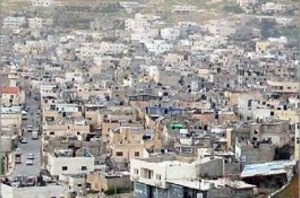
The camp is severely overcrowded, with narrow streets and alleys, no pavements and almost no open spaces; houses open directly onto the lanes. The original layout, designed by French and British planners, resembled European refugee barracks between the two world wars. Sewage ran in open channels until 1988, when work began on an underground network. Today water, electricity, telephone, sewage and street maintenance are linked to Bethlehem municipality. Many families who could afford it moved out to build larger homes in al-Doha and nearby areas, while some of Bethlehem's poorer residents moved in for cheaper housing.
Health Situation
For years, open sewage and irregular rubbish collection spread disease in the camp. Conditions have improved with better infrastructure and health awareness. Today UNRWA runs a health centre in the camp, alongside two other medical centres, a community rehabilitation centre, a childhood centre and a women's programme centre.
Economic Situation
Before 1967, residents worked on nearby farms, in stone quarries and on construction sites, while educated residents worked for UNRWA, the Jordanian government or in the Gulf. After 1967, many worked in construction and agriculture in Israel and nearby settlements. Today unemployment is very high, because many young people are not allowed to work in Israel. Shops and businesses line the Jerusalem–Hebron road beside the camp.
Education
In the early years, pupils studied in a large tent, sitting on the ground. In 1954 UNRWA opened two preparatory schools, for about 800 boys and 850 girls. Today UNRWA runs schools in the camp providing basic education, while secondary students attend schools in Bethlehem and nearby villages. Three kindergartens were founded in 1974 in partnership with UNRWA. Dheisheh has a higher rate of university graduates than other areas of the Bethlehem Governorate.
Frequently Asked Questions About Dheisheh Camp
Where is Dheisheh refugee camp located?
It lies about 3 km south of Bethlehem's city centre, along the Jerusalem–Hebron road in the southern West Bank.
When was Dheisheh Camp established?
In 1949, on land leased by UNRWA from the Jordanian government, for about 3,200 refugees.
How many people live in Dheisheh Camp?
UNRWA counts about 13,000 registered refugees. The 2017 census counted 8,711 people in the camp proper, while BADIL estimated about 17,503 refugees in 2018.
Where do Dheisheh's refugees come from?
From up to 79 villages, mainly west of Jerusalem and in the Hebron district. The largest groups come from Zakariyya, Bayt Itab, Jarash and Bayt Nattif.
Why is it called Dheisheh?
The site was once an Egyptian army barracks with a dense thicket of trees, called "heisha" in Egyptian Arabic. The word was later pronounced "dheisha" and became the camp's name.
Conclusion
Dheisheh began as a field of tents for refugees from the villages west of Jerusalem and Hebron, and became the largest camp in the southern West Bank and a centre of political and cultural life. Its neighbourhoods still carry the names of the villages its people lost, and despite overcrowding, unemployment and repeated raids, they continue to hold onto the right to return.
More from the archive

 Download Our Palestine App
The whole archive in the palm of your hand: depopulated villages, the Nakba, the massacres and Al-Aqsa — free, with no ads to erase the story.
Download Our Palestine App
The whole archive in the palm of your hand: depopulated villages, the Nakba, the massacres and Al-Aqsa — free, with no ads to erase the story.



Comments
No comments yet — be the first to write one.
Add your comment
Name and email are optional. Comments appear after review.
Social and Cultural Life
Dheisheh is known for its political and cultural diversity and its strong civil society, with 30 to 35 youth and community organisations over the years. The most prominent include:
Relations with neighbouring towns were uneasy at first, but grew closer during the First Intifada, when villages such as Artas sheltered the camp's youth during raids.