
Ein Arik Refugee Camp

Ein Arik Refugee Camp near Ramallah: History, Villages of Origin and the Right of Return
Ein Arik Camp is a small, unofficial Palestinian refugee camp on the land of the village of Ein Arik, west of Ramallah. It was founded in by refugees driven from the villages around Lydda and Ramla, such as al-Barriyya, Jimzu, Innaba, al-Qubab and Abu Shusha. Its first families lived in caves and under trees before receiving tents, and the camp has never been recognised by UNRWA as an official camp. This guide covers its history, origins, living conditions and the right of return.
Quick Facts About Ein Arik Camp
| Arabic name | مخيم عين عريك |
|---|---|
| Country / Region | Palestine, central West Bank |
| Governorate | Ramallah and al-Bireh, on the land of the village of Ein Arik |
| Distance from Ramallah | About 7–10 km to the west |
| Year established | |
| Status | Unofficial camp, not recognised by UNRWA |
| Area | About 20–25 dunums |
| Origin of residents | Villages of the Ramla, Jerusalem, Jaffa and Gaza districts |
The Nakba: Why Ein Arik Camp Exists
Ein Arik Camp was born from the Nakba (Arabic for "catastrophe"): the mass expulsion of Palestinians during the occupation of Palestine in . Roughly 750,000 Palestinians were driven from their homes. In July 1948, the people of Lydda, Ramla and the surrounding villages were expelled and forced to walk east into the hills west of Ramallah. Some of them reached the village of Ein Arik, with its springs and orchards, and stayed there.
The Right of Return
The right of return is the central demand of Ein Arik's refugees. It rests on several foundations in international law:
- UN General Assembly Resolution 194 (), paragraph 11, resolved that refugees wishing to return to their homes and live at peace with their neighbours should be permitted to do so at the earliest practicable date, and that compensation should be paid to those choosing not to return and for loss of or damage to property.
- The Universal Declaration of Human Rights (Article 13) affirms everyone's right to leave any country, including their own, and to return to it.
- UN General Assembly Resolution 3236 () reaffirmed the "inalienable right" of Palestinians to return to their homes and property.
From the hills around Ein Arik, the refugees can look west towards the coastal plain where their villages once stood, only a short distance away.
History of the Camp
Caves, trees and tents (1948–1950s)
The first refugees sheltered in caves, under trees and in the open, sleeping on the ground. They suffered greatly before UNRWA distributed some tents and tarpaulins. After the tents, they built shelters of stone and mud, roofed with wood and tree branches.
UNRWA housing units
The situation remained like this until UNRWA built housing units of concrete block: one room for small families and two rooms for larger ones.
After 1967
After the occupation of the West Bank in , many of the camp's families left for Jordan or nearby cities. An Israeli census that year recorded 215 people in Ein Arik registered as having come from the territories occupied in 1948. Those who remained are the families whose roots go back to the villages from which they were expelled in 1948.
An Unrecognised Camp
Ein Arik is one of five unofficial refugee camps in the West Bank identified by the PLO's Department of Refugee Affairs, alongside Qaddura, Silwad and Birzeit in the Ramallah area and New Askar in Nablus. Although UNRWA leased the camp's land and built housing there, it does not count Ein Arik among its official camps. As a result, the camp receives few services and suffers from a shortage of resources.
The Current Situation
Ein Arik and the villages west of Ramallah have faced rising settler attacks. In June 2026, Ein Arik's village council reported that settler militias were assaulting residents and preventing them from reaching their land, and that new pastoral settlement outposts had begun to take over large areas of the village's land.
Origin of the Name
The camp takes its name from the village of Ein Arik (عين عريك) on whose land it stands. "Ein" means "spring" in Arabic, reflecting the many freshwater springs in the village. According to local tradition, the village's roots go back to Roman times, and the name has been linked to a meaning of "many springs". The name is also spelled 'Ein 'Arik or Ain Arik.
Location and Geography
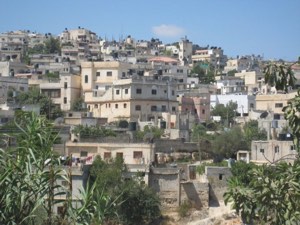
Ein Arik Camp lies on the land of the village of Ein Arik, about 7–10 km west of Ramallah, at around 550 metres above sea level. The village is surrounded by Deir Ibzi', Ein Qiniya, Beit Ur al-Tahta and the town of Beitunia. It is known for its springs and its orchards of olives, almonds, walnuts, grapes and pomegranates, and is home to both Muslim and Christian families.
Area and Land
The camp covers about 20–25 dunums. About half of this land is registered as religious endowment (waqf) land, and the other half belongs to the village's original residents. UNRWA leased the land and paid rent to the waqf and to the landowners.
Villages of Origin
The families who remain in the camp trace their roots to these places depopulated in 1948:
- Ramla district: Al-Barriyya, Jimzu, Innaba, Al-Qubab, Al-Burj, Abu Shusha and the city of Ramla
- Jerusalem district: Ishwa' and 'Islin
- Jaffa district: Al-Safiriyya
- Gaza district: Al-Sawafir
Population
| Year | Figure | Source |
|---|---|---|
| 1945 | 610 (village of Ein Arik, before the Nakba) | Village Statistics, 1945 |
| 1961 | 1,385 (village of Ein Arik) | Jordanian census |
| 1967 | 642, of whom 215 registered as refugees from 1948 | Israeli census |
| 2007 | 1,567 (village of Ein Arik) | Palestinian Central Bureau of Statistics |
The jump between 1945 and 1961 reflects the arrival of the refugees. Because the camp is not an UNRWA camp and is not counted separately in Palestinian censuses, there is no official current figure for its residents.
Housing and Living Conditions
The camp's homes grew out of the one- and two-room units UNRWA built after the tents. Without official camp status, residents receive few services and depend on the facilities of the village of Ein Arik and nearby towns.
Frequently Asked Questions About Ein Arik Camp
Where is Ein Arik refugee camp located?
It lies on the land of the village of Ein Arik, about 7–10 km west of Ramallah in the central West Bank.
Is Ein Arik an official UNRWA camp?
No. It is one of five unofficial refugee camps in the West Bank and is not recognised by UNRWA, although the agency leased its land and built housing there.
When was Ein Arik Camp established?
In 1948, by refugees expelled from villages around Lydda and Ramla during the Nakba.
Where do Ein Arik's refugees come from?
From al-Barriyya, Jimzu, Innaba, al-Qubab, al-Burj, Abu Shusha and Ramla in the Ramla district, Ishwa' and 'Islin in the Jerusalem district, al-Safiriyya in the Jaffa district and al-Sawafir in the Gaza district.
Conclusion
Ein Arik Camp is one of the smallest and least-known refugee communities in Palestine: families who began their exile in caves and under olive trees, a short distance from the coastal plain where their villages stood. Unrecognised by UNRWA and now facing settler pressure on the lands around them, they continue to hold onto the right to return.
More from the archive

 Download Our Palestine App
The whole archive in the palm of your hand: depopulated villages, the Nakba, the massacres and Al-Aqsa — free, with no ads to erase the story.
Download Our Palestine App
The whole archive in the palm of your hand: depopulated villages, the Nakba, the massacres and Al-Aqsa — free, with no ads to erase the story.



Comments
No comments yet — be the first to write one.
Add your comment
Name and email are optional. Comments appear after review.